


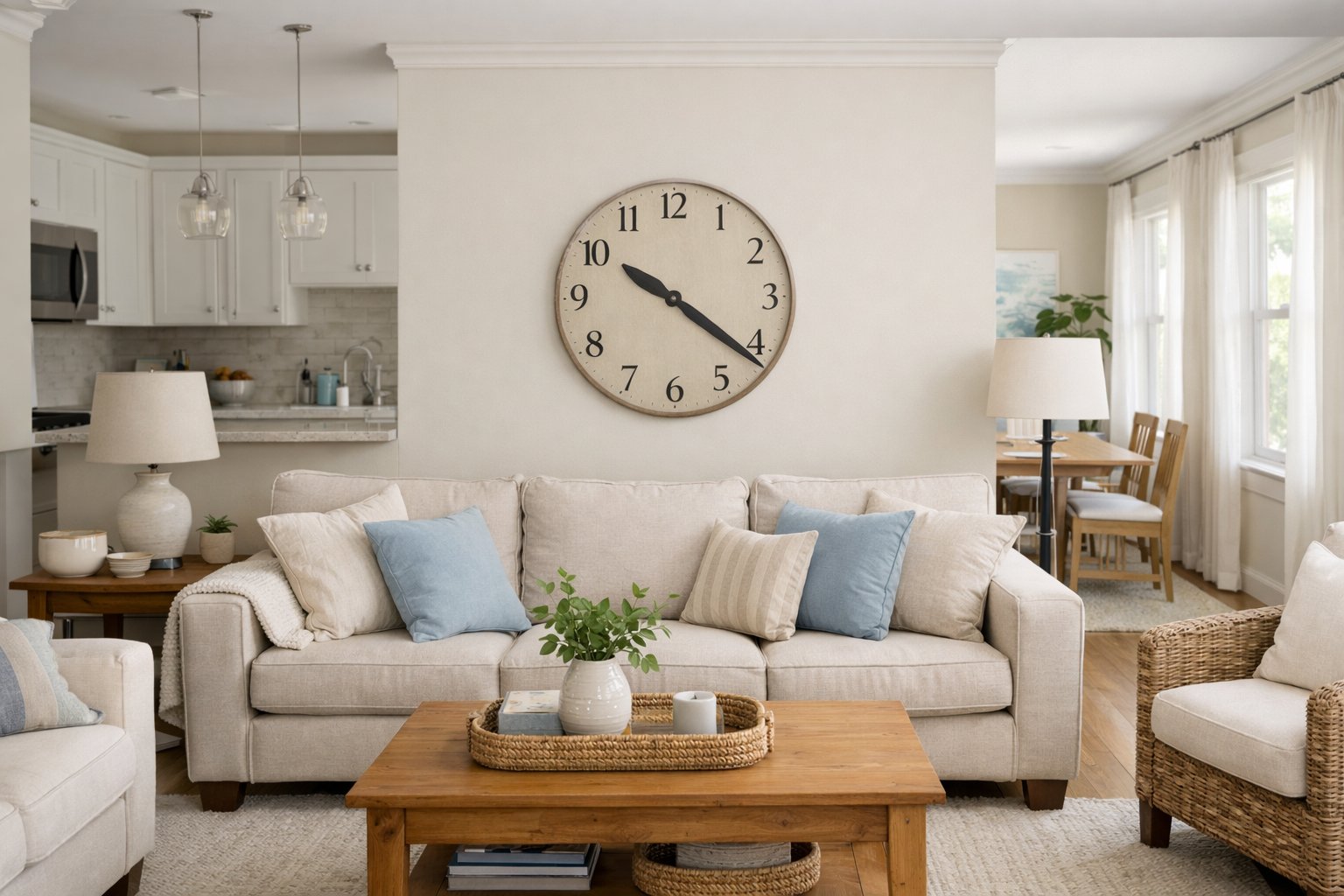
Open-concept living rooms are a hallmark of many Wilmington homes. Fewer walls, longer sightlines, and blended living, dining, and kitchen areas create bright, welcoming spaces—but they also make wall décor decisions trickier than expected. One of the most common design missteps in these layouts is choosing a wall clock that feels oddly out of scale. Too small, and it disappears. Too large, and it dominates the room in all the wrong ways.
Choosing the right wall clock size for an open-concept space is less about trends and more about proportion, placement, and how the clock interacts with surrounding elements like furniture, ceiling height, and flooring finishes. Getting the size right helps the room feel intentional rather than unfinished.
Why open-concept rooms need different clock sizing
In traditional rooms, wall clocks usually live within defined boundaries—between door frames, above mantels, or inside smaller wall sections. Open-concept layouts remove those visual limits. A clock may be viewed from multiple angles and distances, often across an entire living and dining zone.
Because of this, clocks in open spaces must hold visual weight. A clock that works perfectly in a hallway or bedroom often feels underwhelming when placed on a large uninterrupted wall in a shared living area.
Understanding viewing distance and visual balance
A simple guideline designers often follow is that the larger the viewing distance, the larger the clock should be. In Wilmington open-concept homes, clocks are frequently viewed from kitchens, seating areas, and entry points all at once.
For most open living rooms:
18–24 inch clocks work best for medium-sized accent walls
30–36 inch clocks suit main living room walls or areas above consoles
40+ inch clocks are ideal for expansive walls with high ceilings
The goal isn’t to overwhelm the space, but to ensure the clock reads clearly and feels grounded rather than floating awkwardly.
Choosing sizes for common open-concept placements
Above a sofa or sectional
When placing a clock above seating, scale matters more than style. The clock should span roughly ½ to ⅔ the width of the sofa beneath it. Anything smaller often feels like an afterthought.
Oversized clocks work especially well here because the furniture visually anchors them, preventing the wall décor from feeling top-heavy.
Near the dining area or kitchen boundary
Clocks placed near dining spaces often compete with light fixtures, cabinets, or artwork. Medium-to-large clocks (24–30 inches) usually strike the right balance, offering visibility without crowding surrounding elements.
In open kitchens, the clock should feel proportional to cabinet height and backsplash lines rather than floating too close to the ceiling.
Ceiling height plays a bigger role than expected
Many Wilmington homes feature vaulted or 9- to 10-foot ceilings. Taller walls visually shrink smaller décor. If the ceiling height exceeds nine feet, stepping up a clock size category often solves the problem instantly.
Large clocks also help draw the eye upward, reinforcing the openness of the space instead of leaving walls feeling bare or unfinished.
Coordinating clock scale with flooring and finishes
Wall clocks don’t exist in isolation. In open-concept rooms, décor should visually connect with flooring materials to create flow between spaces. Natural wood or metal-framed clocks often pair well with continuous flooring styles such as hardwood or luxury vinyl plank.
Rooms with wide-plank flooring or bold grain patterns can comfortably support larger clock sizes without visual conflict. In contrast, minimalist floors may benefit from clocks that introduce scale and texture to avoid the space feeling flat.
For homeowners already designing around wood tones or plank layouts, clock sizing becomes another tool for reinforcing balance alongside flooring choices like those often selected from hardwood flooring options or luxury vinyl flooring styles that flow throughout open living areas.
When oversized clocks actually work best
Oversized wall clocks have gained popularity for good reason—they solve scale issues in open layouts almost effortlessly. In Wilmington homes where coastal light and open floor plans dominate, larger clocks often feel more relaxed and intentional than smaller decorative pieces clustered together.
A single oversized clock can replace multiple smaller accents, simplifying the wall while still making a statement. This approach works especially well on long, uninterrupted walls that might otherwise feel empty.
Common sizing mistakes to avoid
Choosing based on trend alone rather than room proportions
Placing small clocks on oversized walls, causing visual imbalance
Ignoring furniture width when mounting above sofas or consoles
Mounting too high, which disconnects the clock from the rest of the room
Taking measurements before purchasing helps avoid these pitfalls and ensures the clock complements the room instead of competing with it.
A size-first approach creates calmer spaces
In open-concept living rooms, wall clocks should feel anchored, readable, and proportional. Starting with size—before color or style—leads to better long-term results. Once the scale feels right, design choices become easier and the entire space feels more cohesive.
Need help pulling a room together from the ground up? Our team works with Wilmington homeowners every day to create open, balanced living spaces—from flooring selection to design guidance that makes every detail feel intentional. Reach out through our contact page to start planning a space that truly fits the way the home is used.


