


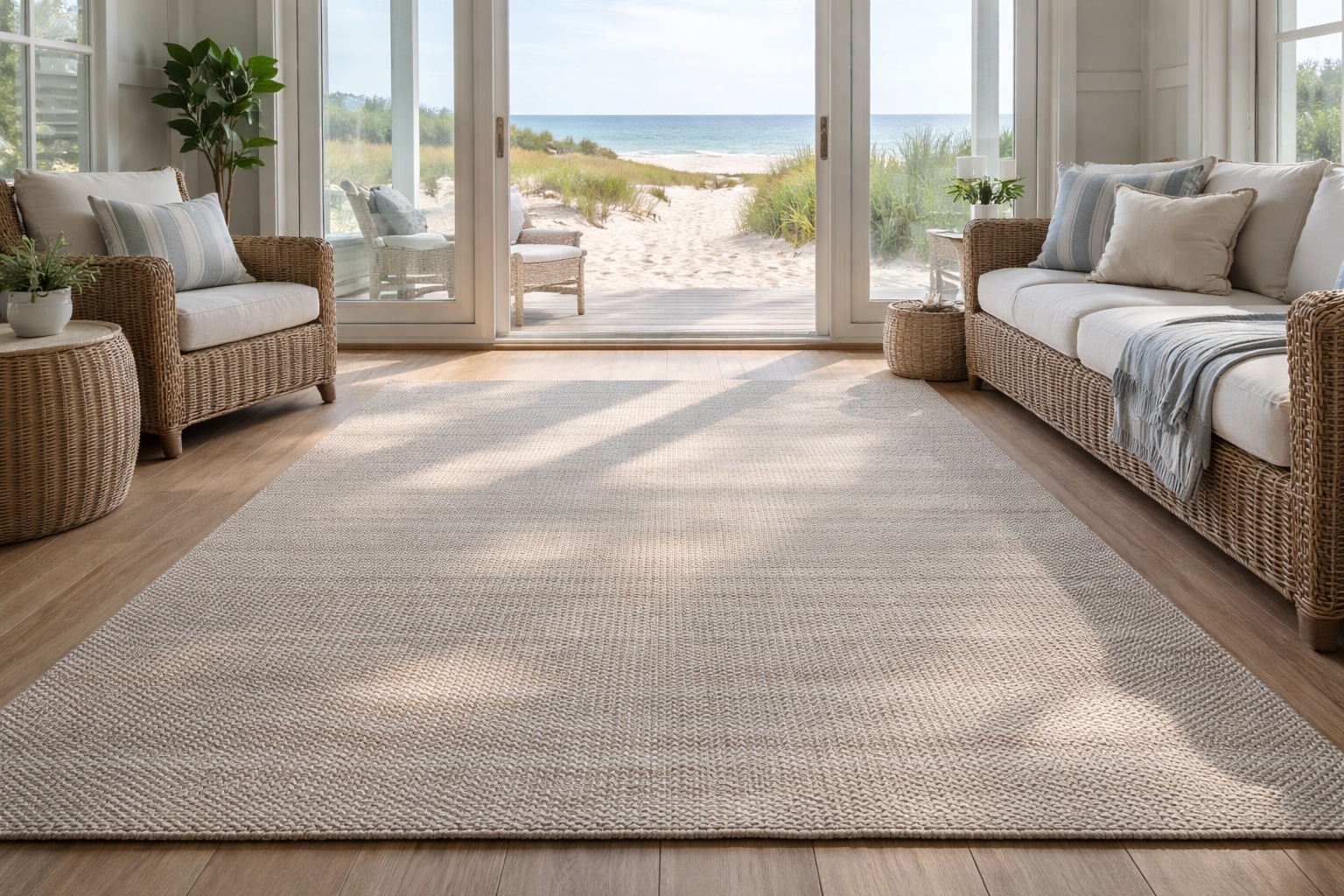
Life near the coast is full of easygoing moments—until the sand shows up in the living room. In Wilmington-area homes, it’s normal to have sandy feet, damp flip-flops, and salty air drifting in through open doors. That’s exactly why indoor-outdoor area rugs have become such a smart staple: they bring comfort and style, while standing up to the realities of coastal living.
These rugs are designed to handle frequent foot traffic, quick cleanups, and the humidity that comes with beach-town life. With the right material and weave, an indoor-outdoor rug can look pulled-together without feeling precious or high-maintenance.
Built for beach-house wear and tear
Coastal homes deal with a specific combo: fine sand (which acts like grit), moisture (from rain, wet swimsuits, and humidity), and salt in the air (which can be tough on some textiles over time). Indoor-outdoor rugs are made to resist those stressors better than traditional indoor rugs.
Most are crafted from performance fibers like polypropylene, PET (recycled polyester), or other synthetics that don’t readily absorb water. That matters in humid climates, because quick-drying materials help reduce musty smells and mildew risk. Plus, the tighter, low-profile construction makes it harder for sand to sink deep into the rug.
The best materials for sand, humidity, and salty air
Polypropylene is one of the most common choices for indoor-outdoor rugs because it’s durable, moisture-resistant, and typically easy to spot-clean. PET rugs are also popular for their softer feel and good fade resistance, especially in bright sunrooms and rooms with big sliders.
A coastal-friendly rug should also be UV-stable (or labeled as fade-resistant) if it will sit in direct sunlight. Sun pours into Wilmington homes through windows and glass doors, and that light can wash out color over time if the fibers aren’t made for it.
Easy-clean wins for real life
Indoor-outdoor rugs work so well because they’re not fussy. Sand usually sits on the surface, so vacuuming is quicker. For deeper cleaning, many can be shaken out outdoors, gently scrubbed with mild soap, or rinsed (depending on the brand’s care instructions). The goal is simple: a rug that fits the pace of a coastal household without creating extra chores.
For homes that need a fully beach-proof foundation underfoot, pairing an indoor-outdoor rug with luxury vinyl flooring can be a great long-term setup—easy to clean, moisture-friendly, and tough enough for daily traffic.
Where these rugs shine in coastal homes
Indoor-outdoor rugs aren’t just for patios. They’re a practical choice for plenty of indoor spaces too—especially in homes where the outdoors is basically part of everyday living.
Entryways that catch the mess first
The front door and the garage entry are the most common “sand drop zones.” A sturdy, tightly woven indoor-outdoor rug helps trap debris right away, so sand doesn’t travel through the whole house. Look for patterns that hide a little grit between cleanings, and choose a size wide enough to get a few steps on it.
Sunrooms, screened porches, and indoor-outdoor living areas
These spaces are made for coastal relaxation, but they also get the most exposure to humidity and airflow. Indoor-outdoor rugs handle that better than natural-fiber rugs that can hold moisture. In screened porches, a rug also makes the space feel more finished—more like an extension of the home, not just an add-on.
Living rooms near sliding doors
In open-plan homes where the back door is constantly in use, a rug can help protect the flooring underneath and define the seating area. If there’s hardwood nearby, a rug also reduces the chance of sand grit getting dragged across the surface.
For anyone balancing coastal style with long-term durability, understanding how hardwood flooring behaves in busy households can help with overall planning—especially when deciding where rugs make the biggest difference.
Choosing a look that feels coastal without the “theme”
Coastal style doesn’t have to mean seashell prints or loud nautical stripes. Many of the best indoor-outdoor rugs for beach-area homes are subtle: soft neutrals, sandy taupes, muted blues, gentle stripes, and woven textures that feel relaxed and natural.
A few style tips that work especially well in Wilmington-area homes:
Go for texture over bold pattern for a calm, lived-in look.
Pick mid-tone or slightly heathered colours if sand is a daily issue (they hide it better than bright white).
Choose low-pile, tight weaves if pets are part of the household—less snagging, easier vacuuming.
Sizing that makes rooms feel finished
A rug that’s too small can make a room feel chopped up. In living rooms, the best look usually comes from placing at least the front legs of seating on the rug. In dining areas, make sure chairs stay on the rug even when pulled out. In entryways, wider runners help catch sand across the whole pathway instead of just the centre.
Simple habits that keep rugs looking new
Even the toughest rug benefits from a few easy routines:
Vacuum regularly (especially during beach season).
Shake out or beat sand outside when needed.
Spot-clean spills quickly so they don’t set.
Let the rug dry fully if it gets damp (fresh air and sunlight help).
These small steps keep the rug fresh, help it last longer, and keep the whole space feeling cleaner.
Ready to pick the right rug for a coastal lifestyle
At Barefoot Flooring, Inc. in Castle Hayne, NC, we understand coastal living because we serve families throughout Wilmington and the surrounding beach communities every day. We’re here to help you choose indoor-outdoor area rugs that truly handle sandy feet, humidity, and salty air while still looking beautiful in your home. Connect with us through our contact us page to schedule a consultation and let our flooring experts guide you to the right fit for your space.


