


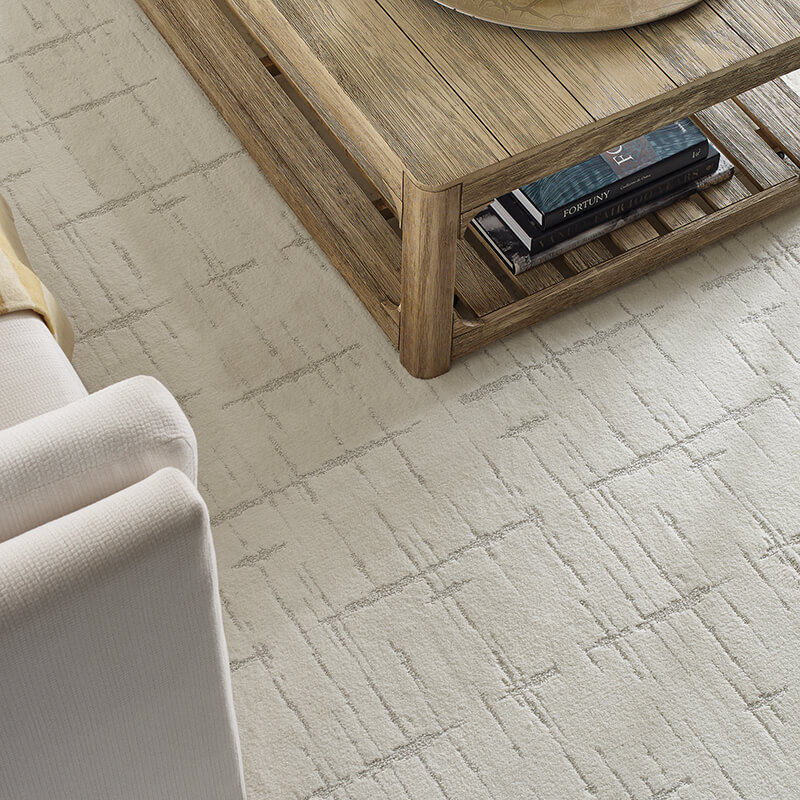
Patterned carpet has a way of pulling a whole room together, adding rhythm, character, and a sense of intention underfoot. The catch is that getting it right depends on planning that happens long before the first piece is rolled out. Repeats need to align across doorways, seams need to disappear into the design, and even the direction of the pattern matters more than most people expect.
That is where thoughtful preparation pays off. We at Barefoot Flooring, Inc. have been proudly serving Wilmington, Castle Hayne, Leland, Southport, Hampstead, Burgaw, Rocky Point, Surf City, Saint James, and Winnabow, NC for over two decades, and our flooring experts know how to map a patterned carpet so it looks effortless once installed. The work begins with a careful look at the room, the pattern, and the way light will travel across the finished floor.
Why patterned carpet rewards careful planning
Patterned carpet is essentially printed or woven artwork sized for a roll. Every motif, stripe, or geometric shape has a precise repeat distance, and that repeat dictates how much extra material you need so the design flows naturally from one strip to the next. Skipping this step is what causes mismatched florals at thresholds and visible jogs along long hallways.
There is also the question of how a pattern reads in context. A bold trellis can feel grand in a wide great room and chaotic in a narrow hallway, while a tight geometric can look refined in a study and busy in an open living space. Choosing the right scale of pattern for the room is the first quiet decision that separates a polished floor from a frustrating one.
Reading the repeat before you order
Every patterned carpet has a horizontal repeat (across the width) and a vertical repeat (along the length of the roll). To align the design across seams, installers add what is called pattern match allowance, often an extra repeat per seam, which adds to the total yardage. Skimping here is the most common reason a pattern looks "off" later.
A good rule of thumb when reviewing samples in our showroom:
- Measure the full repeat in both directions and write it down before pricing the job.
- Add a pattern repeat to every seam length, not just to the room dimensions.
- Ask whether the pattern is a straight match, a half-drop, or a quarter-drop. Each one changes the math.
- Always order from a single dye lot so colors stay consistent across pieces.
Mapping seams where they belong
Seam placement is half art, half geometry. The goal is to keep seams out of the eye's natural path, away from the room's main entry view and out of high-traffic lanes. In open layouts, that often means pushing seams toward the long edges or under the typical furniture footprint.
Direction matters too. Pile direction should run consistently across all pieces, usually toward the main light source, so the carpet reads as one continuous surface. Mixing directions, even by accident, can create the illusion of a color change that no amount of stretching will fix.
Field conditions that change the plan
Subfloor flatness, doorway transitions, and HVAC vents all influence the layout. An out-of-square room may need the pattern centered on a focal wall rather than aligned to a corner, since a corner-aligned pattern in a crooked room only highlights the crookedness. Our installation team checks these conditions on every estimate so the layout is realistic, not just theoretical.
How to keep seams nearly invisible
Invisible seams come from three things working together: the right pad, careful trimming, and proper heat-seam technique. A high-quality pad gives the carpet a stable base, while precise edge trimming removes factory variations that cause hairline gaps. The heat-seam tape then bonds the backings cleanly so the surface stays flush.
Lighting also plays a role you can plan for. Seams running parallel to a window appear softer than seams running perpendicular to one, because side light tends to skim along the seam rather than across it. When you browse our flooring catalog, our team can talk through which orientation will flatter your specific room.
Caring for your pattern after install
Once the floor is in, a few simple habits protect the alignment you worked so hard to plan. Vacuum in the direction of the pile, rotate area rugs and furniture seasonally to even out wear, and address spills with blotting rather than scrubbing. Patterned carpet shows wear patterns less than solid carpet, but consistent care still keeps the design crisp for years.
A warm welcome to your next project
Come visit our Castle Hayne showroom when you are ready to see patterned styles in person, feel the textures, and talk through layout options with people who genuinely enjoy this work. We would love to help you choose the right pattern, plan the seams, and request a free estimate tailored to your space. Family is the heart of how we do business, and your project gets that same care from start to finish.


