


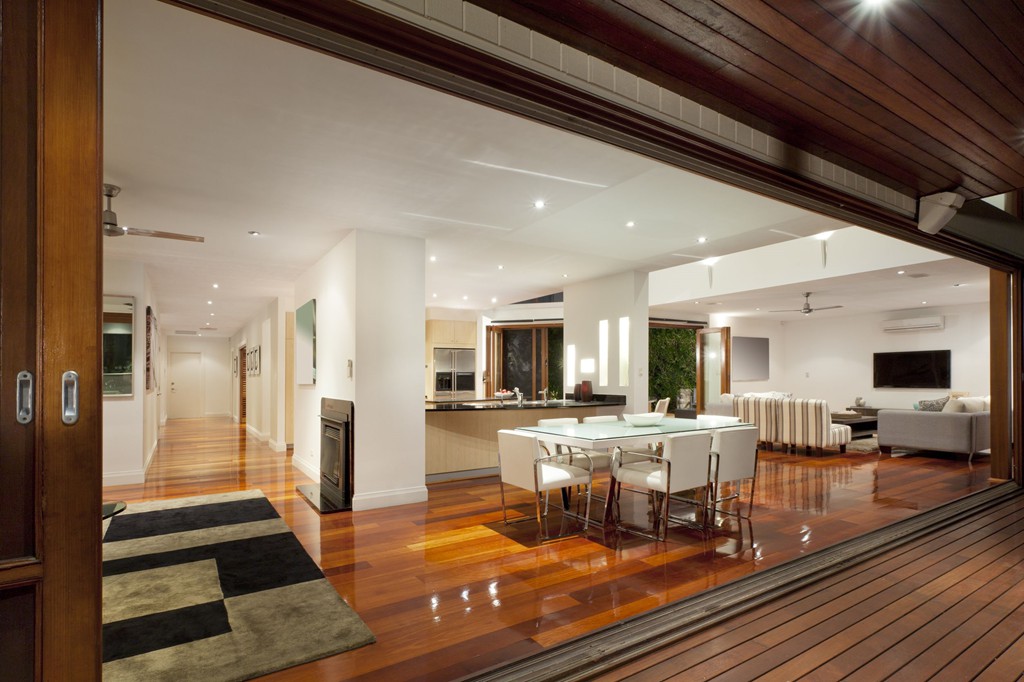
Hardwood flooring has a timeless appeal that few other materials can match. It adds warmth, character, and long-term value to a home. But once you decide you want hardwood, a bigger question comes up almost immediately: solid or engineered? The two options look similar on the surface, but they perform very differently depending on where and how they're installed. Here's what you need to know before you decide.
What Is Solid Hardwood?
Solid hardwood flooring is exactly what it sounds like — each plank is a single, solid piece of wood, typically about three-quarters of an inch thick. It's milled from a solid log and has been the traditional choice for generations. Because it's solid all the way through, it can be sanded down and refinished multiple times over its lifespan, sometimes lasting for generations with proper care.
What Is Engineered Hardwood?
Engineered hardwood is constructed differently. It features a top layer of real hardwood veneer bonded over several layers of plywood or high-density fiberboard. From the surface, it looks nearly identical to solid hardwood, but its layered construction makes it far more dimensionally stable.
Stability and Moisture Resistance
This is where the two products differ most. Solid hardwood expands and contracts with changes in humidity and temperature, which can lead to gapping, cupping, or warping if conditions swing too much. Engineered hardwood's cross-layered construction resists this movement, making it a smarter choice for basements, homes with radiant heating, or coastal climates where humidity levels fluctuate throughout the year.
Installation Differences
Solid hardwood is almost always nailed or stapled down to a wood subfloor, which limits where it can be installed — it's generally not recommended over concrete slabs or below grade. Engineered hardwood offers much more flexibility. It can be nailed, glued, or even installed as a floating floor, which means it works in more rooms and over more types of subfloors, including concrete.
Refinishing and Longevity
Solid hardwood has the advantage when it comes to refinishing. Since the wood runs all the way through the plank, it can typically be sanded and refinished many times, extending its life well beyond a human lifetime in some cases. Engineered hardwood can also be refinished, but the number of times depends on the thickness of the top veneer layer — thicker veneers allow for one or two refinishes, while thinner ones may not be sandable at all.
Cost Considerations
Generally speaking, engineered hardwood tends to be more budget-friendly than solid hardwood, though prices vary widely based on the wood species, finish quality, and plank width. It's worth comparing both options side by side rather than assuming one is automatically cheaper.
Which Should You Choose?
If you're renovating an older home with wood subfloors and want a floor that can be refinished for decades, solid hardwood is a strong choice. If you're dealing with a concrete slab, a basement, or a home in a humid climate, engineered hardwood offers the wood look with far better performance.
Get Personalized Advice
Every home has different subfloor conditions, humidity levels, and design goals, so the "right" answer really does depend on your specific situation. Our team has helped countless homeowners weigh these tradeoffs — you can read more about our background and experience on our About Us page.
The best way to compare solid and engineered hardwood side by side is to see and feel the samples in person. Visit us at one of our convenient showroom locations, listed on our Locations page, and let our team help you find the perfect fit for your home.


